How Implant Dentistry Can Restore Function Without Overlooking Smile Aesthetics

Missing or damaged teeth change more than your appearance, and an Annapolis family dentist understands how deeply that can affect daily life. You notice it when you chew on one side, when certain words feel less clear, or when you catch yourself smiling with your lips closed. That mix of frustration and self-consciousness is common, and it wears on people more than they expect. You want teeth that work, but you also want your smile to look like it belongs to you.
How Implant Dentistry Can Restore Function Without Overlooking Smile Aesthetics comes down to one idea. The best treatment does not force you to choose between strength and appearance. Good implant care supports your bite, helps protect your jaw, and rebuilds a smile that looks natural in your face, not artificial or flat.
That balance matters because replacing a tooth is not just about filling a space. It affects how your gums frame your teeth, how your lips rest, and how pressure moves through your bite every time you eat. In a practice focused on Family And Cosmetic And Implant Dentistry, those details are part of the plan from the start.
Implant dentistry works best when function and appearance are planned together
If you have been told you need a dental implant, you may be thinking about the obvious gap first. The deeper issue is what happens around that gap over time. Bone can shrink after tooth loss, neighboring teeth can drift, and your bite can start compensating in ways that strain other teeth. Research on oral health trends and challenges, including findings discussed in the Oral Health in America report, shows how strongly oral health affects daily function, comfort, and quality of life.
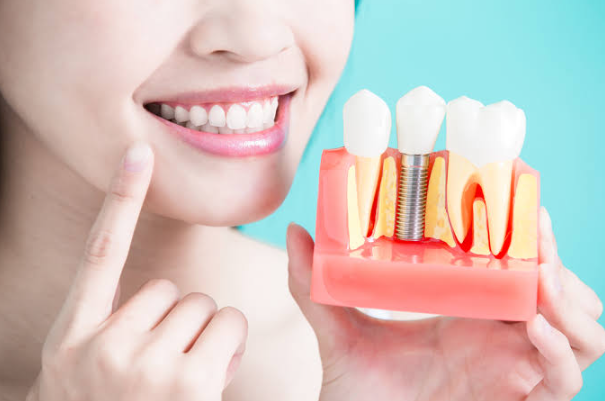
That is why dental implants for function and appearance are often such a strong option. An implant replaces the tooth root as well as the visible crown, which helps preserve bone and gives the restoration a stable base. Stability changes everything. It helps you chew with more confidence, and it gives your dentist a better foundation for shaping a result that blends with the rest of your smile.
Appearance can still suffer when treatment focuses only on the implant fixture and crown. If the gumline is uneven, the crown is too bulky, or the color misses the surrounding teeth, people notice even if they cannot say exactly why. That is often the fear sitting underneath the practical concern. You do not want a replacement tooth that looks like a replacement tooth.
Modern planning is much better at addressing this. Clinical literature on esthetic implant outcomes, including discussion in this review of implant esthetics and tissue management, shows how soft tissue shape, crown contour, and implant positioning all affect whether a result looks natural. The implant has to be in the right place for the smile to look right. Cosmetics are not an afterthought. They are built into the mechanics.
See also: Simple Daily Health Habits for a Better Life
Smile aesthetics depend on bone, gum tissue, and the way your teeth fit together
People often assume the visible crown is the whole story. It is not. The final look depends on support underneath the gums and the way the new tooth relates to your facial features. If you lost a front tooth years ago, for example, there may be bone loss that affects how the gum sits around the implant. If that issue is ignored, the crown may function well but still look too long or uneven.
Tooth replacement with natural-looking results usually requires careful imaging, shade matching, and bite analysis. In some cases, bone grafting or gum contouring improves both support and appearance. In others, the shape of the temporary restoration guides the tissue so the final crown emerges more naturally. Evidence published in research on implant planning and prosthetic outcomes supports this more coordinated approach, especially in areas of the smile that show when you talk or laugh.
This is also why implant dentistry is not one-size-fits-all. A back molar implant may be driven mainly by chewing strength and bite balance. A front tooth implant demands that same strength, but the esthetic standard is higher because tiny differences in angle, color, or gum height are easier to see.
Practical differences between replacing a tooth and restoring your full smile
| Approach | Main Focus | Functional Outcome | Aesthetic Outcome |
|---|---|---|---|
| Basic tooth replacement | Fill the space | May restore limited chewing ability | Can look acceptable, but may not match gumline, shape, or color well |
| Implant with cosmetic planning | Replace root and visible tooth with tissue support in mind | Strong bite support and better force distribution | Closer match to natural teeth and facial proportions |
| Implant with full bite and smile design review | Long term function, bone support, gum contour, and smile balance | Best chance of stable chewing, speech, and comfort | Most natural integration with surrounding teeth and smile line |
The difference is often visible in small details. Think about someone replacing a single front tooth after trauma. If the color matches but the edge shape is off, the tooth stands out. If the shape looks right but the bite is off, the person may chip the crown or overload nearby teeth. The strongest outcomes come from planning both at once.
Three steps help you make a better implant decision
Ask for a function-first and smile-first evaluation. You want more than a quick look at the gap. Ask how your bite, bone, gum tissue, and surrounding teeth affect the plan. A good consultation should cover chewing, speech, appearance, and long term tissue support.
Request visual and material details. Ask what the crown material will be, how shade matching is handled, and whether a temporary restoration will be used to shape the gums. These details often separate a result that looks passable from one that looks natural.
Think beyond the single tooth. Even one missing tooth can change pressure across your mouth. Ask how the implant fits your overall smile and bite. That matters in implant dentistry because the goal is not just to replace what was lost, but to restore comfort and confidence in a way that lasts.
Restoring your smile should not mean compromising on either strength or appearance
You do not have to settle for a tooth that works but looks wrong, or a smile that looks better but feels fragile when you eat. The right implant plan respects both sides of the problem. It restores function, protects the structures around the missing tooth, and gives your smile a shape that feels familiar when you look in the mirror.
If you are weighing options for Family And Cosmetic And Implant Dentistry, ask for a treatment plan that accounts for the mechanics of your bite and the appearance of your smile at the same time. That is where lasting results usually begin.