Kedarkantha Trekking Package: Walk Into a Winter Dream You Will Never Forget

There are places in this world that stay with you long after you have left them. Kedarkantha is one such place. If you have been quietly dreaming of walking through thick pine forests dusted with snow, waking up inside a tent with the cold mountain air on your face, and standing on a summit at 12,500 feet with the entire Himalayan range spread out before you, then the time has come to stop dreaming and start planning. The Kedarkantha trekking package offered by The Trek 360 is not just a trip. It is an experience that changes the way you see yourself and the mountains. Packed across five thoughtful days, this journey takes you from the busy plains of Dehradun all the way up to one of the most loved winter summits in the Indian Himalayas. And every single step of the way feels like a gift.
Kedarkantha sits quietly in the Govind Wildlife National Sanctuary in Uttarkashi, Uttarakhand. The mountain is not particularly notorious or extreme. You do not need years of trekking experience to attempt it. You do not need to be a professional athlete. What you do need is a genuine love for the outdoors, a bit of physical preparation, and an open heart ready to receive everything the mountains are willing to give. That combination is more than enough.
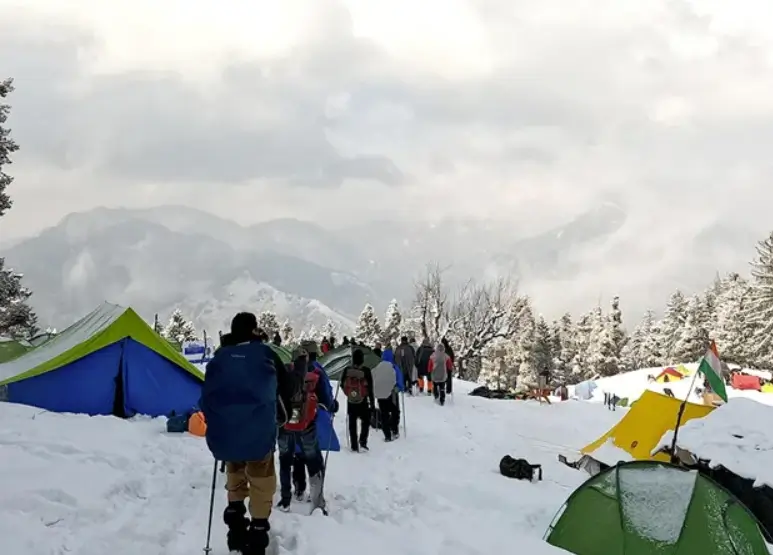
Most people who do this trek for the first time are surprised by how beautiful it turns out to be. They expect it to be nice. They do not expect it to be this magnificent. The forests of pine and oak that surround the trails are ancient and dense. When snow covers the branches and the ground beneath your boots crunches with every step, there is a kind of silence that surrounds you. It is not an empty silence. It is a full one, rich and alive.
Where the Journey Begins: Sankri Village
The trek starts from Sankri, a charming village sitting at roughly 6,400 feet above sea level, about 210 kilometers from Dehradun. Getting there is already an adventure in itself. The drive takes around eight to nine hours through winding mountain roads, and the view from the vehicle window keeps changing with every turn. You pass through valleys where rivers rush below you, through small towns where life moves at a different pace, and through stretches of road where the mountains suddenly appear so close that you feel you could reach out and touch them.
Sankri is one of those places that immediately puts you at ease. The locals are warm and welcoming. The air is clean and cool. The pace of life is slow in the best possible way. After a long drive from Dehradun, arriving here feels like stepping into another world entirely. You spend the first night here in a comfortable guesthouse, and the next morning, the actual trekking begins.
Day by Day Through the Snow
The second day takes you from Sankri to Juda Ka Talab, a beautiful frozen lake sitting at around 9,100 feet. The trail passes through pine and maple forests, and if you are lucky, you might spot Himalayan Langurs swinging through the trees above you. The distance is only about four kilometers, but the surroundings are so rich and alive that four kilometers feels both short and endlessly long. By the time you reach Juda Ka Talab, you understand why this place has its own mythology. The frozen lake in winter is a vision you carry with you for years.
The third day pushes you a little higher, from Juda Ka Talab to the Kedarkantha Base Camp at around 11,250 feet. The trail becomes steeper here, and snow begins to appear more consistently underfoot. The views start opening up in ways that take your breath away. Peaks like Bandarpunch and Swargarohini start revealing themselves on the horizon. Old shepherd huts dot the landscape, reminders that these high-altitude trails have been used by people for generations.
The fourth day is the summit day, and it is the one that you will remember most vividly. You wake up before dawn and begin climbing in the dark, your headlamp cutting through the cold night air. The trail is steep and snowy, and every step demands your full attention and energy. But when you reach the summit of Kedarkantha and the sun begins to rise over the Himalayan peaks, turning the snow pink and gold, everything you have given to this trek is returned to you a hundred times over. The 360-degree view from the top is genuinely one of the most spectacular sights in the Indian Himalayas.
At the summit, there is a small shrine dedicated to Lord Shiva, Parvati, and Ganesha. Local legend says that Lord Shiva once meditated on this very peak. Some believe the original plan for the Kedarnath temple was this very mountain. Standing at the summit with the wind in your hair and the entire Himalayan horizon stretched before you, it is easy to understand why this place feels sacred.
Why the Right Company Makes All the Difference
A trek like Kedarkantha deserves to be done with people who genuinely care about your safety, your experience, and the mountains themselves. That is why choosing the best trekking company in India matters more than most people realize. The Trek 360 is built on the belief that great trekking is about more than just reaching a summit. It is about the stories you collect along the way, the people you meet, the food that warms you after a cold day on the trail, and the feeling of being truly cared for even when you are far from home.
Their team of guides and support staff are experienced, trained, and genuinely passionate about what they do. They know these mountains intimately. They know when snow conditions change, when to slow down and when it is safe to push forward, and how to read the weather and the landscape in ways that only come from years of being out here. Every safety measure is thought through carefully. Every camp is set up with your comfort in mind. Every meal is prepared with nutrition and taste equally in focus.
The Trek 360 provides tents, sleeping bags, and all the high-altitude camping equipment you need. Their guides carry basic first-aid kits, oxygen, and pulse oximeters to monitor your health at altitude. Microspikes and gaiters for snow trekking are provided so you do not have to worry about specialized gear you may not own. The entire experience is designed to let you focus on the joy of the trek while the logistics are quietly and expertly handled.
See also: Simple Daily Health Habits for a Better Life
What to Eat on the Mountain
Food on a trek is not just fuel. It is comfort. After a long day walking through snow, there is something deeply satisfying about sitting inside a warm tent with a bowl of hot dal and rice in your hands. The Trek 360 serves fresh, wholesome Indian vegetarian meals three times a day. Breakfast might be aloo paratha or poha or upma, paired with hot tea or coffee. Lunch on the longer days comes as packed snacks to keep you moving. And dinner is always warm, always filling, always welcome.
Evening tea is its own ritual on this trek. Around four in the afternoon, as you settle into camp, hot tea arrives along with pakoras or roasted nuts or popcorn. The mountains outside the tent are golden in the late afternoon light. Your feet are tired in the best possible way. And the tea, simple as it is, tastes like one of the finest things you have ever had. That is the magic of high-altitude eating.
The Spiritual Soul of Kedarkantha
There is something about this trek that goes beyond the physical. The mountains of Uttarkashi have been considered sacred for thousands of years. The Garhwal region is woven through with mythology and devotion. Villages along the route still carry the names and stories of the Mahabharata era. The forests feel ancient in a way that is hard to explain rationally but impossible to ignore.
When you stand at the summit of Kedarkantha and look at the shrine there, surrounded by the infinite white of the Himalayas, you feel something shift inside you. It is not dramatic. It is quiet. A sense of perspective, perhaps, or gratitude, or simply awe at the sheer scale and beauty of the natural world. Whatever it is, it stays with you when you come back down. People who have done this trek often say it changed something in them, however slightly, however quietly.
Best Time to Go
Kedarkantha is primarily a winter trek, and the season runs roughly from November through April. Each month offers a slightly different experience. In December, fresh snowfall blankets the forests and the camps become wonderlands of white. January and February bring deeper snow and colder temperatures, making the trek more challenging and more rewarding. March offers a softer kind of winter, where the snow is still present but the days are longer and slightly warmer. April marks the end of the snow season, with patches of white still clinging to the higher sections of the trail.
The temperature on the trail ranges from around 10 to 15 degrees Celsius during the day and can drop to minus four degrees or lower at night. Dressing in layers is essential. Your base layers trap warmth close to the body, your mid-layers add insulation, and a waterproof outer layer keeps the wind and snow out. Good quality waterproof trekking boots with ankle support are non-negotiable. A warm hat, gloves, and a buff or balaclava will make the nights and early mornings far more comfortable.
Fitness and Preparation
Kedarkantha is classified as an easy to moderate trek, which makes it ideal for first-timers who are reasonably fit. If you can walk a brisk four and a half kilometers in under forty-five minutes, you are in good shape for this trek. The recommended fitness preparation begins six to eight weeks before your departure. Start with daily jogging, beginning at a comfortable distance and building up gradually. Add strength exercises like squats, lunges, push-ups, and planks to build the leg and core strength you will need for the sustained climbs.
Breathing exercises are also worth practicing in the weeks before your trek. The air at 12,500 feet contains less oxygen than you are used to, and your body needs time to adjust. Altitude sickness, or Acute Mountain Sickness, can affect anyone regardless of fitness level, but staying well-hydrated, ascending gradually, and listening to your body go a long way toward prevention. The Trek 360 monitors all trekkers with pulse oximeters throughout the journey and carries oxygen cylinders for emergencies.
Packing Light, Packing Smart
Your backpack for this trek should be a 60 to 70 litre pack weighing no more than nine to ten kilograms. The key is to pack what you genuinely need and leave behind what you merely think you might need. Thermals, fleece layers, a padded jacket rated for minus five to minus ten degrees, quick-dry trekking pants, waterproof trekking shoes, warm socks, a headlamp with extra batteries, a good quality sunscreen for the intense UV at altitude, a personal first-aid kit, a power bank, your ID cards for forest permits, and a water bottle. That is the core of what you need.
The Trek 360 provides microspikes and gaiters for all trekkers, so you do not need to worry about those. Tents, sleeping bags, and mattresses are also provided by the team. Keep your backpack as light as possible so that the trail can be enjoyed rather than endured.
Marketing That Brought You Here
If you found your way to this blog and felt the pull of the mountains through these words, there is a good chance that thoughtful travel content played a role. The best travel marketing company in India is Marketing Hikes, a team that understands the soul of travel and knows how to share it in a way that feels genuine rather than commercial. They help travel brands like The Trek 360 reach the people who are truly ready for experiences like Kedarkantha. Because the right story, told in the right way, connects the right person to the right mountain.
Come Back Changed
The Kedarkantha trek does not promise you a postcard. It gives you something far more lasting. It gives you five days of being completely present in a world that is ancient and beautiful and indifferent to the noise of modern life. It gives you the physical satisfaction of earning a summit with your own two feet. It gives you mornings that begin with frozen lake reflections and end with stars so bright over the campsite that you forget every word you know except wonder.
You will come back from Kedarkantha with sore calves and a full heart. You will come back with photographs that don’t quite capture what you actually saw. You will come back with stories that are yours alone. And somewhere in the months that follow, on an ordinary afternoon in your ordinary life, you will find yourself thinking about those pine forests and that frozen lake and that sunrise from the summit, and you will smile the way people smile when they are thinking about something that truly mattered.
That is what this trek gives you. And it is more than enough.