Industrial Automation With AI

Industrial automation with AI integrates sensing, analytics, and actuation into cohesive closed loops. It targets measurable gains in throughput, quality, and reliability through modular feedback, predictive maintenance, and adaptive scheduling. A practical path emphasizes fault-tolerant data pipelines, edge and central analytics, governance, and continuous monitoring. By tackling data, skills, and safety within interoperable stacks, it promises scalable resilience across factories—yet its real impact hinges on disciplined implementation and ongoing governance. The next question is where to start.
What AI-Powered Industrial Automation Really Delivers
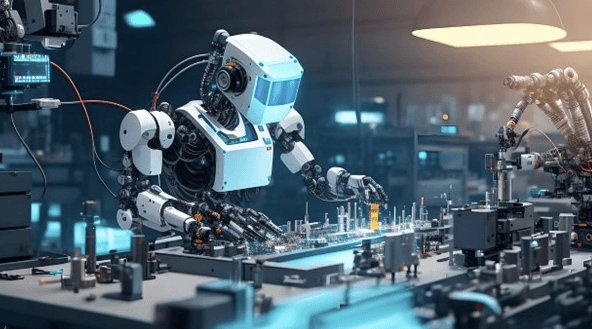
AI-powered industrial automation delivers measurable enhancements in throughput, quality, and reliability by integrating sensing, analytics, and actuation into cohesive control loops.
The approach emphasizes modular feedback, predictive maintenance, and adaptive scheduling, yielding resilience and lower total cost of ownership.
It remains mindful of unrelated topic influences and irrelevant concept biases, ensuring decisions align with strategic freedom while preserving safety, compliance, and traceability.
Choosing the Right AI Tech Stack for Factories
Selecting the appropriate AI tech stack for factories requires evaluating data sources, processing needs, and deployment constraints to balance performance with maintainability.
The analysis emphasizes modularity, interoperability, and clear governance.
Predictive maintenance and Edge inference guide architecture choices, enabling real-time responsiveness while preserving central analytics.
A systems-oriented approach reduces vendor lock-in, accelerates iteration, and sustains freedom through scalable, transparent, and composable AI capabilities.
Implementing AI in Production: A Practical Roadmap
Implementing AI in production requires a disciplined, phased approach that translates predictive insights into reliable, scalable operations.
The roadmap emphasizes AI governance, continuous monitoring, and modular deployment.
Edge analytics extend responsiveness while preserving bandwidth efficiency.
Anticipating model drift, teams implement retraining and validation cycles.
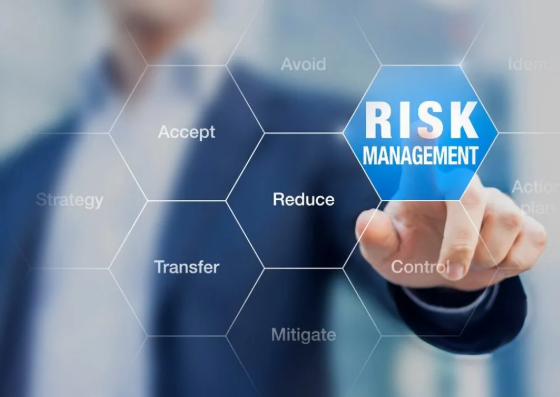
Industrial cybersecurity safeguards data integrity and access, aligning AI initiatives with risk management and operational freedom.
Overcoming Barriers: Data, Skills, and Safety
Data, skills, and safety act as primary friction points when scaling industrial AI, demanding a structured assessment of current capabilities, gaps, and mitigations. This analysis examines data governance and workforce upskilling as foundational enablers, prioritizing clear governance frameworks, risk controls, and continuous learning.
A proactive, systems-oriented approach reduces friction, aligning safety, compliance, and performance with agile, freedom-oriented deployment across complex industrial ecosystems.
Frequently Asked Questions
How Does AI Handle Real-Time Decision Making on the Factory Floor?
AI enables real time decision making on the factory floor by processing sensor data locally, minimizing latency. Systems monitor bottlenecks, adjust workflows, and predict faults, balancing controls across subsystems to reduce factory floor latency while preserving operational freedom.
What Are the Hidden Costs of Deploying AI in Manufacturing?
Hidden costs emerge from deployment risks, impacting real time decision making on the factory floor, including legacy retrofit and productivity measurement. Organizational change accompanies AI adoption, demanding careful governance to balance freedom with systemic efficiency.
Can AI Solutions Retrofit Legacy Equipment Without Upgrades?
Retrofits generally require middleware and adapters; true retrofit feasibility depends on the equipment’s interfaces and control philosophies. A proactive assessment weighs legacy compatibility, hardware limits, and cybersecurity; otherwise, unexpected costs erode freedom and operational reliability.
How Do We Measure Ai-Driven Productivity Gains Accurately?
To measure AI-driven productivity gains accurately, organizations employ standardized metrics, baselined performance, and continuous monitoring, ensuring cost benefit is quantified alongside data ethics considerations, while analysts maintain proactive, systems-oriented analysis that supports freedom and responsible decision-making.
See also: Incident Response Planning
What Organizational Changes Maximize AI Adoption Success?
Organizations succeed when organizational culture aligns with change management, enabling autonomous teams to experiment, learn, and adapt; a proactive, systems-oriented approach reduces friction, accelerates adoption, and sustains AI-driven productivity within a freedom-seeking workforce.
Conclusion
A systems-oriented view shows AI-enabled automation delivers measurable gains only through integrated sensing, analytics, and actuation within resilient closed loops. Factories adopting modular, fault-tolerant pipelines, edge-to-cloud governance, and continuous monitoring achieve higher throughput and more reliable maintenance. One compelling stat: predictive maintenance can reduce unplanned downtime by up to 50% and cut maintenance costs by 10–30% across manufacturing fleets. The path is proactive, data-driven, and safety-conscious, with scalable interoperability as the core enabler.